Waste
- Expensive collection and disposal
- Limited landfill capacity and expansion pressure
- Leachate risks to groundwater and coastal water
- Difficult logistics and long-term environmental liabilities

A problem shared is a problem solved.
Engineering-led shared infrastructure, bringing technologies, industrial expertise, project development and funding together to turn waste liabilities into potential local materials, resources and economic opportunities.

Recover suitable material locally: reduce landfill dependence, substitute some imported aggregates and preserve scarce land. Existing landfill reuse requires assessment, remediation and safe closure—not simply less new waste.
Divert suitable waste from landfill, use controlled thermal treatment and recover its mineral content for construction materials. Suitable organics follow a parallel composting pathway.
Two distinct residues, two qualified routes: APCR is used in the established accelerated-carbonation aggregate route; incinerator bottom ash (IBA) is the RPU development opportunity. Converging lines show potential product destinations, not automatic mixing. Separate treatment, material testing, leaching and end-use requirements apply; IBA compliance has not been established. Mineralisation may generate carbon benefits, subject to verification.
CIAP—the Circular Infrastructure Alliance Platform—coordinates technologies, industrial expertise, project development and funding. Modular applications are tailored to local needs: not every project includes every technology.
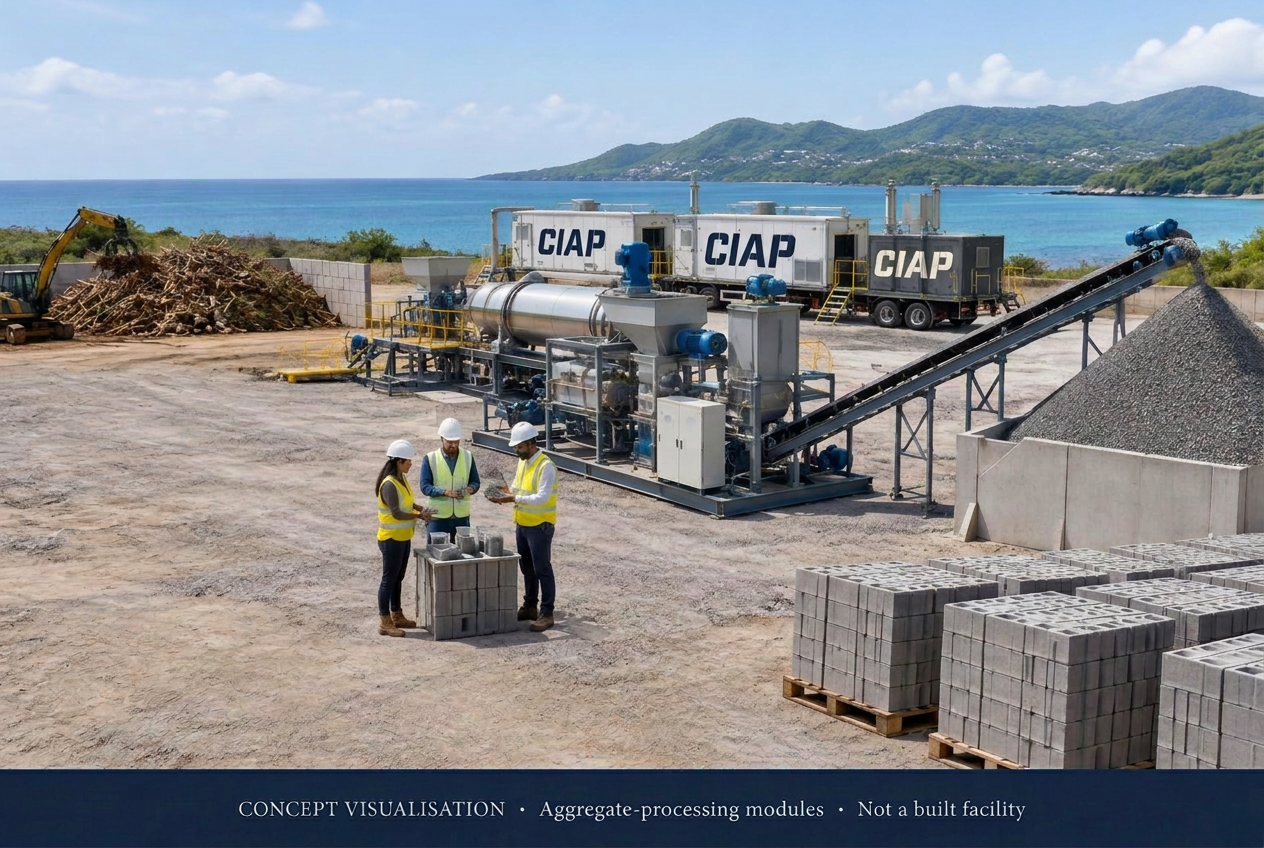
CIAP is not starting from scratch.
Specific components have commercial precedent; the complete CIAP system still requires integration and demonstration.
Explore the platform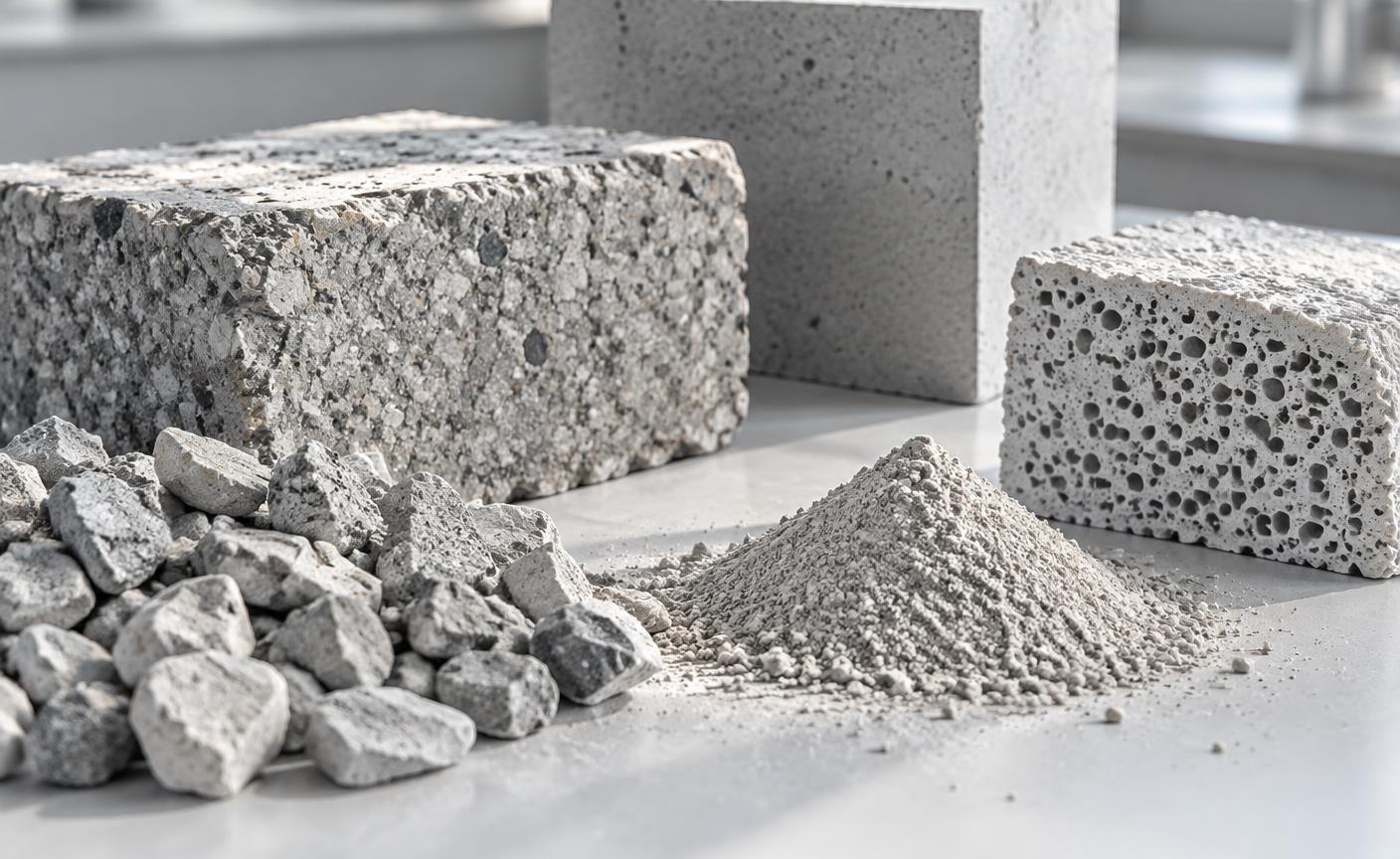
Established route · APCR
APCR is the primary material in the established accelerated-carbonation aggregate route. This provides a technology precedent—not evidence that the integrated CIAP platform is already demonstrated.
RPU development objective · IBA
Adapt the process and plant so IBA can potentially achieve comparable aggregate performance and applicable leaching requirements. The opportunity is to extend the usable mineral resource beyond APCR—not to claim that IBA compliance has been achieved.
APCR and IBA are distinct residues, not interchangeable feedstocks or an automatic combined mix. Each route requires characterisation, suitable treatment, physical-property and leaching tests, and approval for the intended end use. Remaining unsuitable residues need compliant management.
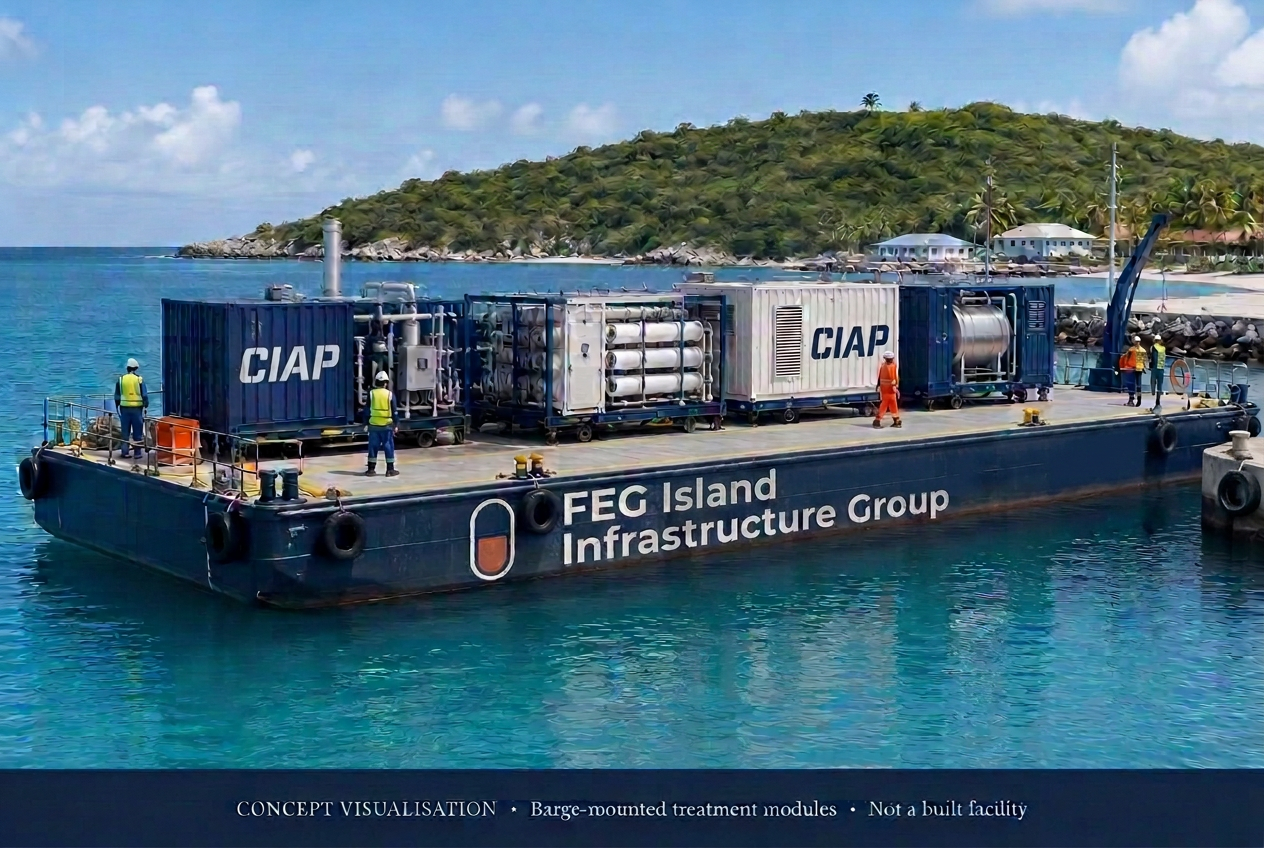
A shared alliance can make specialist capability accessible across locations. Land-based infrastructure is primary; mobile and potential barge deployment are assessed where logistics and feasibility support them.
Explore the shared modelTreatment, transport or disposal creates a substantial local burden.
Aggregates and construction products carry high import and logistics costs.
Local projects need materials with suitable specifications and reliable offtake.
Waste or other resource streams can support a safe, consistent process.
Initial assessment may include the Caribbean, Pacific and Indian Ocean. Economic and logistical conditions—not island status alone—determine suitability. No location is selected, approved, funded or committed by being listed.
Guyana, Dominican Republic and Cayman illustrate potential applications—not selected projects.
Review candidate locations and assumptionsEach proposed cluster explores shared access to a fleet of mobile modular units. Groupings are indicative and subject to feasibility study and government agreement. No participation or deployment is confirmed.
The clusters shown cover the eastern Caribbean and the Guyana–Suriname biomass assessment only at this stage. Wider assessment across the rest of the Caribbean would follow feasibility, to identify similar clusters or larger standalone site requirements.
Outlined circles: proposed members. Filled dots: suggested first deployment sites. Dashed lines: potential circuit routes. All clusters remain subject to assessment.
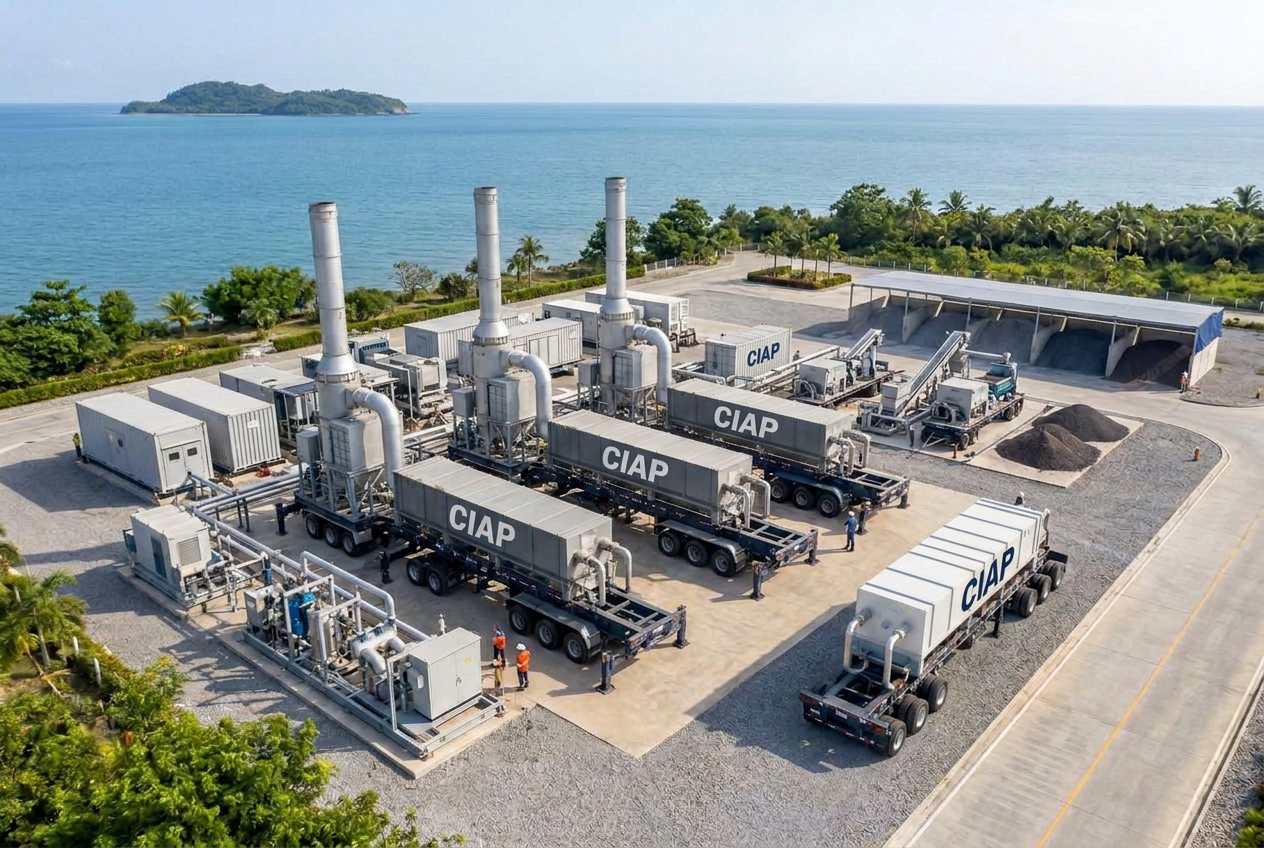
Land-based infrastructure is primary, with mobile and potential barge deployment assessed where feasible. The proposed RPU configuration still needs engineering, material testing and demonstration; it is not a built facility.
Inspect the configuration and capacity basis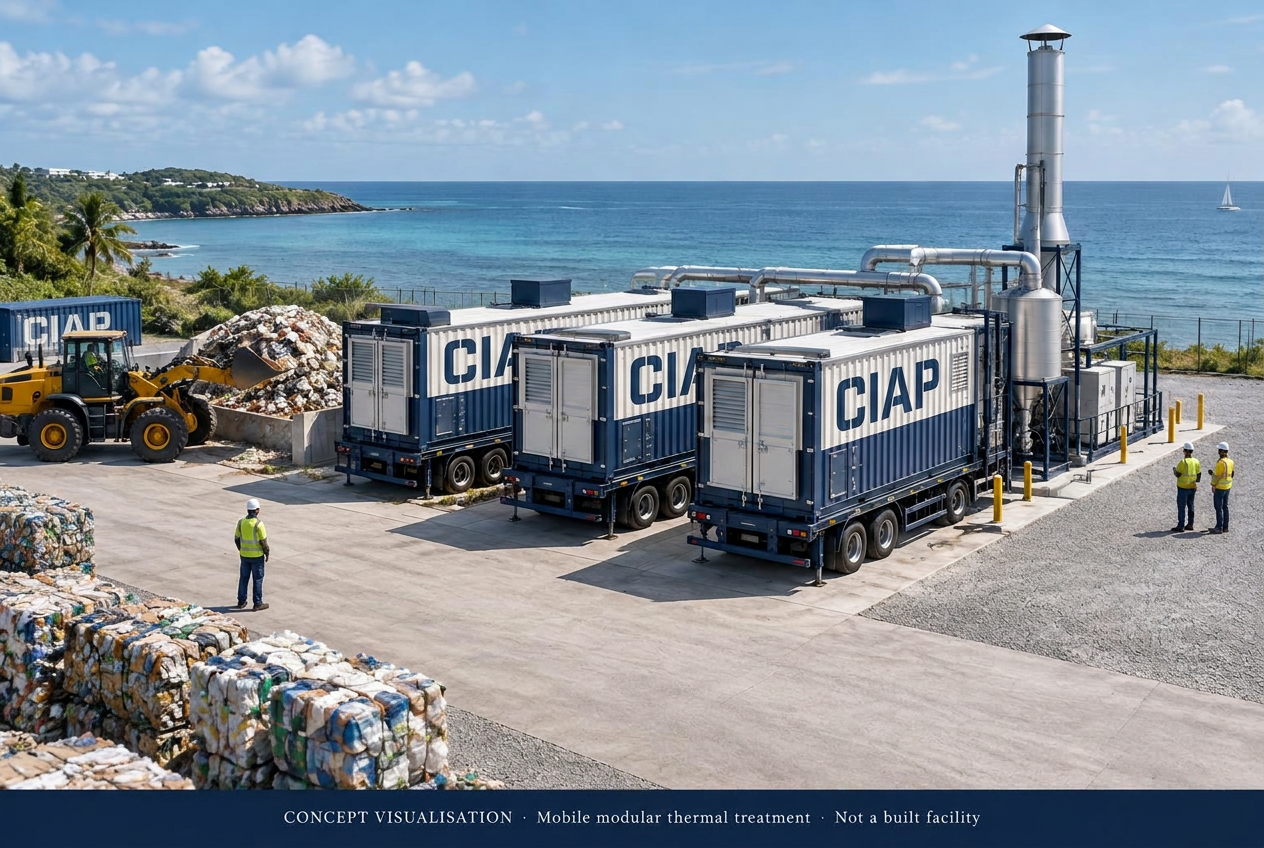
Commercial technology precedent does not establish readiness of the whole platform. Feasibility, engineering and validation must precede an industrial-scale pilot and integrated demonstration.
Review the full technology maturity breakdownConditioned mineral residues assessed as aggregate replacement. Local ash chemistry, leaching and construction specifications determine suitability.
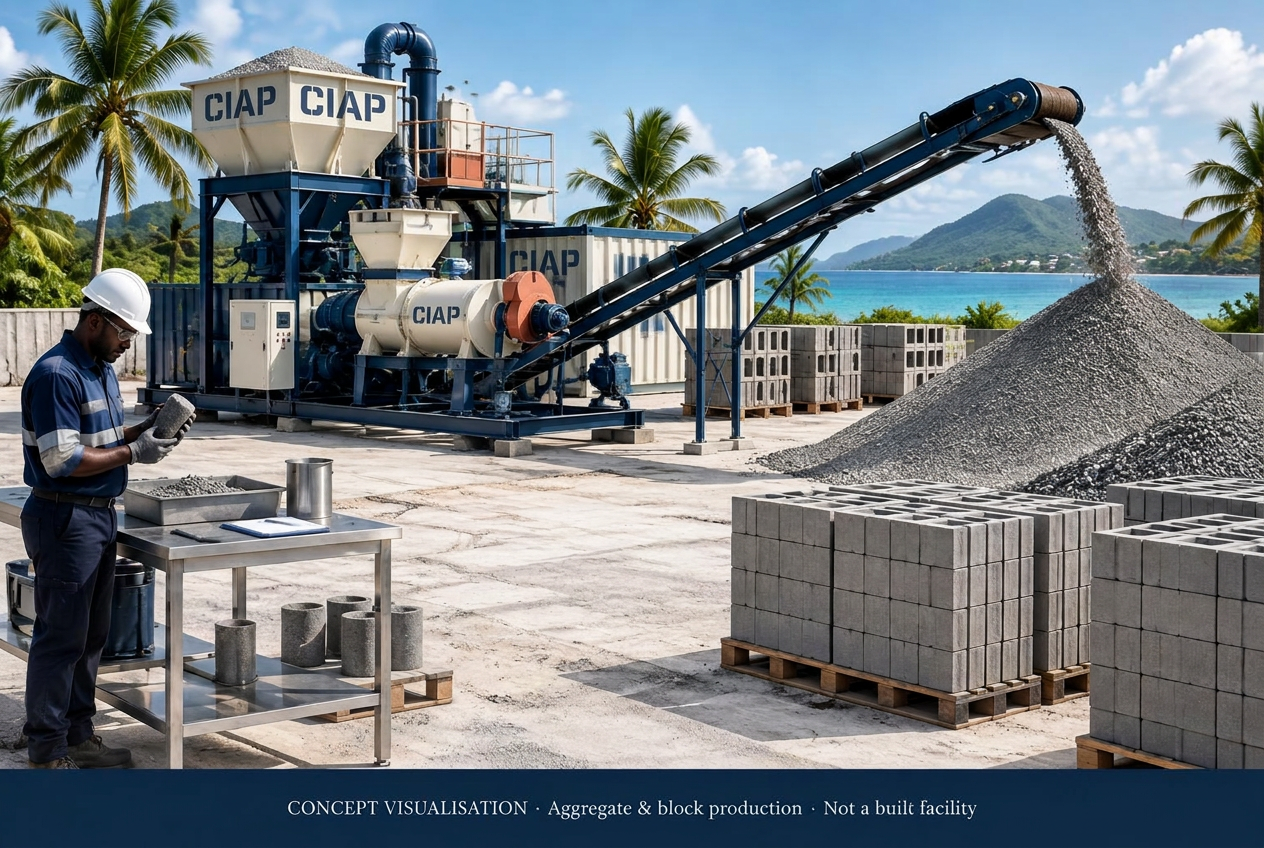
Potential local block manufacture using compliant recovered mineral material, subject to mix design, durability and strength testing.
Biomass-derived supplementary cementitious materials investigated for partial substitution in construction mixes. Performance is feedstock-specific.
A potential lightweight construction pathway for suitable MSW-derived mineral fractions. Product safety and performance must be demonstrated.
Secondary value streams · subject to feasibility and demand
No water output or zero-residual-waste outcome is guaranteed. Mineralisation may generate carbon benefits, subject to verification.
Two Feedstocks: MSW & Biomass
Municipal solid waste and biomass follow distinct pathways towards potential construction materials, with recovered products, energy, water and MSW-only CO₂ capture on side branches. Outputs depend on feedstock suitability, engineering and validation.
Two feedstocks: municipal solid waste and biomass. Sorting at the land-based reception site removes metals and plastics; recoverable plastics are sold and unrecoverable plastics go to a dedicated thermal treatment unit, keeping chlorine out of the main flow. Each main line runs through processing stages towards potential construction materials. Biomass cementitious material also feeds into MSW aggregate production. Produced aggregates / engineered fill then go to stockpiling and delivery to the block plant. Stage-two CO₂ absorption occurs during stockpiling, not aggregate production. Side branches show recovered materials, energy, heat, water, carbon capture (MSW line only — the biomass process has no CO2 capture) and compost. Tab moves between nodes; arrow keys move spatially; Enter or Space opens details; Escape closes them. Full stage descriptions and connections are available in the expandable text alternative below.
Swipe to see more
Alongside MSW and biomass, these feedstocks can be assessed for mineral recovery. Suitable streams may enter conditioning and mineralisation without thermal treatment; contaminants, chemistry and product safety must be assessed case by case.
Fine tailings from ore processing, assessed for mineralisation and potential aggregate production without thermal treatment.
Municipal sludge assessed for drying, stabilisation and potential material recovery; contaminants and treatment requirements determine suitability.
Pulverised fuel ash from lignite generation, assessed for conditioning and mineralisation as an already-combusted residue.
Alkaline alumina refinery residue, assessed for CO₂ mineralisation and potential fill; safety and leaching require validation.
Furnace slag assessed for carbonation and aggregate use. Mineralisation may generate carbon benefits, subject to verification.
Cement kiln and bypass dust, assessed as reactive binder feedstocks subject to chemistry and product-performance testing.
University of Greenwich contributes materials research and technical expertise, subject to appropriate agreements. Laboratory validation, feedstock-specific research, cementitious material development and potential doctoral research support the programme.
Named participants have agreed to be listed. Research involvement does not imply university ownership of the complete platform or completion of all tests.
See research and validation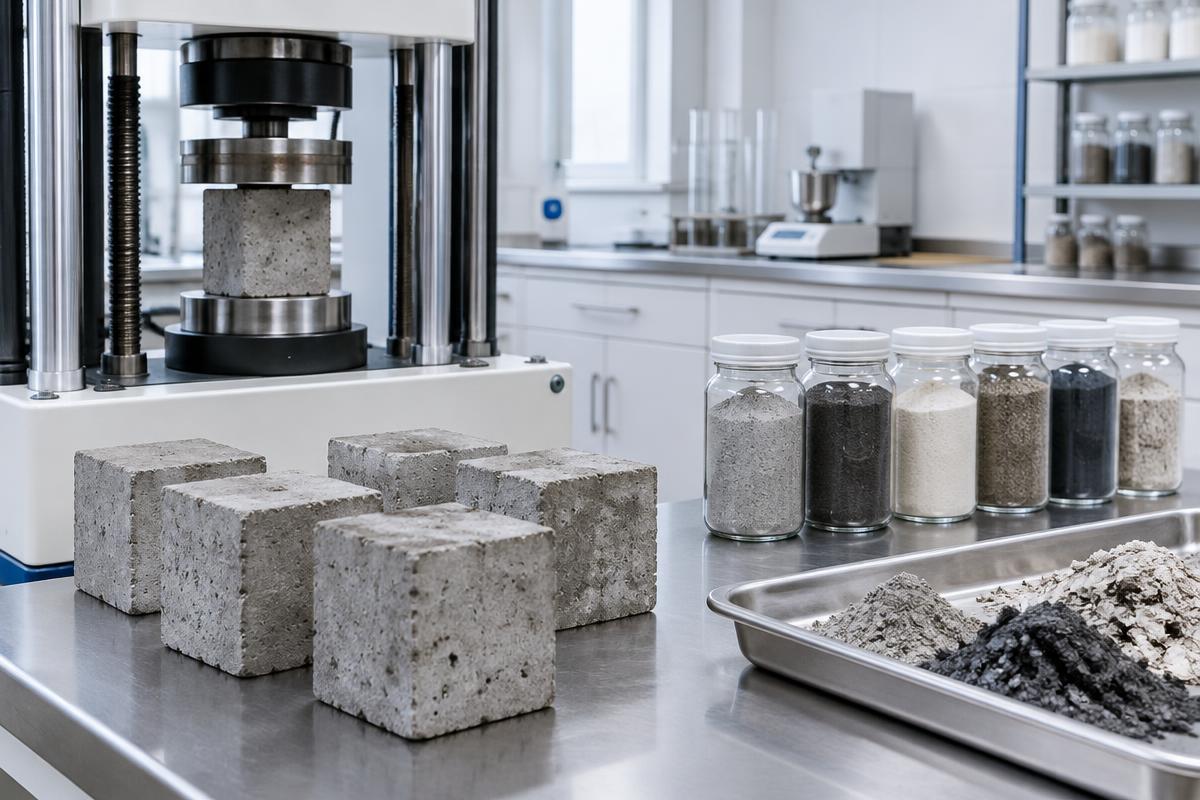
Local materials production can support employment beyond the processing plant: skilled operations, maintenance, deliveries and shared services. Training and local workforce development would form part of deployment planning.
Potential roles in block manufacture, aggregate production, material testing, quality control and product dispatch—keeping more construction-material value locally.
Sorting, metals separation and recovery, equipment operation and preparation of recovered metals for local use or onward sale.
General thermal-treatment (incineration) operation, emissions monitoring, maintenance and site safety, with waste-to-energy operating roles where energy recovery is viable.
Where feasible, sand-battery thermal-storage operation and maintenance, alongside logistics and deliveries for useful heat services.
Potential desalination plant operation, water-quality monitoring, maintenance, storage and water deliveries where a viable, approved water system is included.
Potential barge crews, marine engineering, mooring and transport roles where barge deployment is feasible; post-disaster response planning, logistics and safe debris-processing operations where authorised.
These are potential employment pathways, not confirmed jobs, recruitment offers or job-count forecasts. Roles depend on feasibility, local demand, funding, approvals, safety requirements and training. Energy, sand-battery, desalination, marine and disaster-response activities are conditional options, not committed services.
The immediate requirement is non-dilutive development funding: grants and technical assistance for feasibility and an industrial-scale pilot. Future commercial or project finance follows validation—not a current equity investment offer.
Understand the funding pathwayFeedstock, sites, logistics, product standards and deployment economics.
Engineering configuration, integration, laboratory tests and environmental pathway.
Pilot target TRL 6–7, before deployment and future replication.
Discuss funding, technical assistance, partnerships, research or a candidate location.
Enquiries are saved securely. Email forwarding is not yet enabled.
Contact options